What Is Cast Acrylic Used For? A Closer Look

Informational

Cast acrylic is a durable, lightweight, and visually appealing plastic material that has become a popular choice across many industries. 

Whether you're working on a commercial design project or creating decorative home pieces, cast acrylic offers strength, clarity, and flexibility in a wide range of colors and thicknesses.

But what is cast acrylic used for, exactly? Let’s explore its most common and practical applications.

1.   Signage and Advertising Displays

One of the most widespread uses of cast acrylic is in sign-making and illuminated displays. Its excellent light transmission and ability to be laser-cut, engraved, or printed on make it a favorite for:

  • Storefront signage
  • LED lightboxes
  • Wayfinding signs
  • Retail advertising boards  

Cast acrylic maintains its clarity and vibrancy over time, making it ideal for both indoor and outdoor signage. It can be customized in various colors and finishes to match brand identities.

2.   Display Cases and Product Stands  

Retailers, museums, and exhibitions often use cast acrylic for clear display cases,product risers, and presentation boxes. Its glass-like transparency showcases products attractively without the fragility or weight of real glass.

From high-end jewelry counters to art galleries, cast acrylic is trusted to create elegant, protective enclosures that don’t distract from the items inside.

Read also: Benefits of Using Clear Cast Acrylic Sheet

3.   Interior Design and Furniture  

In modern interiors, cast acrylic is valued for its sleek appearance and versatility. It’s used to make:

  • Room dividers
  • Decorative wall panels 
  • Floating shelves
  • Custom tabletops  

Its ability to be cut, polished, and shaped makes it a designer-friendly material for creating   minimalist or contemporary furniture   pieces with a polished, professional finish.

4.   Architectural Applications  

Thanks to its strength and weather resistance, cast acrylic is often used in architectural elements, especially for:

  • Skylights  
  • Roof panels  
  • Facade details  
  • Outdoor canopies  

It can withstand harsh environments without yellowing or cracking, making it suitable for   long-term outdoor use   in commercial and residential buildings.

5.   Aquariums and Water Features  

Cast acrylic is also commonly used in aquarium manufacturing, especially for larger tanks. Its   optical clarity, impact resistance, and ability to hold water pressure better than glass make it the ideal material for:

  • Home aquariums  
  • Public aquarium panels  
  • Water fountains and decorative tanks  

It offers a distortion-free view, even with thick panels, which is crucial for underwater observation.

6.   Protective Barriers and Shields  

Especially since the pandemic, cast acrylic has seen increasing use in protective barriers, such as:

  • Cashier shields  
  • Reception counter guards  
  • Office desk dividers  

It serves as a clear barrier while maintaining communication and visibility—offering safety without sacrificing customer experience.

Read also: Do’s and Don’ts: Cleaning Acrylic Sheet the Right Way

7.   DIY Projects and Crafts  

Cast acrylic is popular among crafters and hobbyists because it’s easy to cut, engrave, and assemble. People use it for:

  • Custom keychains and signage  
  • Home decor pieces  
  • Photo frames  
  • Wedding and event props  

With the wide variety of colors and finishes available, creative possibilities are endless.

8.   Medical and Industrial Applications

In specialized environments, cast acrylic is used to make:

  • Instrument covers  
  • Medical equipment housings  
  • Machine guards  

Its chemical resistance and clarity make it useful in laboratories, factories, and cleanroom settings where durability and visibility are essential.

So, what is cast acrylic used for?

From advertising and architecture to DIY crafts and safety equipment, cast acrylic proves itself to be a highly versatile and reliable material. 

Its combination of durability, optical clarity, and workability makes it a top choice for both creative and functional applications.

At Margacipta Wirasentosa, we supply premium cast acrylic sheets in a wide range of colors, thicknesses, and finishes—perfect for your next project, big or small.

Looking for high-quality cast acrylic sheets? 

Contact us or visit our Instagram to discover the perfect acrylic solution for your needs.

News Release

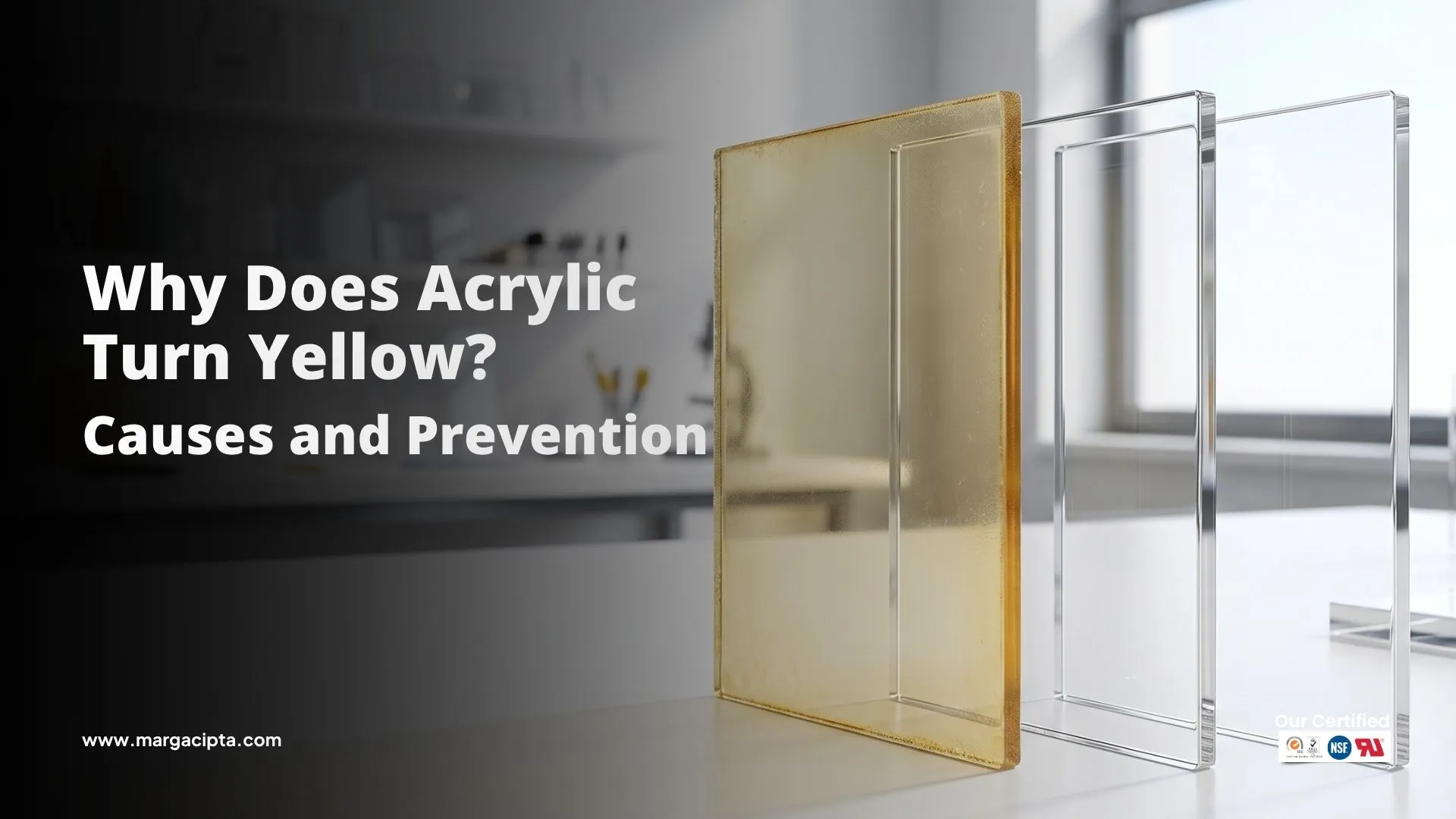
Why Does Acrylic Turn Yellow? Causes and Prevention

High-quality acrylic sheets are highly resistant to yellowing, but certain environmental conditions and material quality can affect their appearance over time. 

If acrylic becomes yellow, it is often due to prolonged UV exposure, harsh chemicals, excessive heat, or the use of low-quality materials.

Understanding why acrylic turns yellow can help businesses and fabricators choose the right material and maintain its clarity for years.

Does Acrylic Naturally Turn Yellow?

Unlike some plastics, acrylic is well known for its excellent optical clarity and UV resistance.

Premium cast acrylic sheets are manufactured to withstand outdoor exposure while maintaining their transparency and color stability. In many applications, high-quality acrylic can remain clear for years with proper care.

However, not all acrylic sheets offer the same level of performance.

Read also: Best Way to Glue Acrylic Sheet: Adhesives and Application Tips

Common Causes of Acrylic Yellowing

1. Prolonged UV Exposure

Although acrylic is naturally UV-resistant, continuous exposure to intense sunlight over many years may gradually affect lower-quality materials.

UV radiation can accelerate material aging, especially if the acrylic is not designed for outdoor applications.

Using UV-resistant acrylic sheets helps minimize this risk.

2. Poor Material Quality

Material quality is one of the biggest factors influencing long-term appearance.

Lower-quality acrylic may:

  • Yellow more quickly
  • Lose transparency
  • Become brittle over time
  • Develop surface imperfections

Premium cast acrylic generally provides better color stability and weather resistance.

3. Harsh Cleaning Chemicals

Cleaning acrylic with unsuitable chemicals may damage its surface.

Avoid using:

  • Ammonia-based cleaners
  • Strong solvents
  • Alcohol-based cleaners
  • Abrasive cleaning products

These chemicals can weaken the surface and contribute to discoloration over time.

Instead, use acrylic-safe cleaners and a soft microfiber cloth.

4. Excessive Heat

Exposure to high temperatures for extended periods can accelerate the aging process of acrylic.

While acrylic performs well in many environments, excessive heat combined with UV exposure may gradually reduce its visual quality.

5. Improper Storage

Storing acrylic sheets in unsuitable environments can also affect their appearance.

To maintain quality:

  • Store sheets indoors when possible
  • Keep them away from excessive sunlight before installation
  • Protect surfaces from dust and contaminants

Proper storage helps preserve the material before fabrication.

How to Prevent Acrylic from Turning Yellow

The best way to maintain acrylic clarity is through proper material selection and maintenance.

Recommended practices include:

  • Choose premium UV-resistant acrylic sheets.
  • Clean using acrylic-safe cleaning solutions.
  • Avoid harsh chemicals and abrasive tools.
  • Install the correct acrylic grade for outdoor applications.
  • Follow manufacturer recommendations for handling and maintenance.

These simple steps can significantly extend the lifespan of acrylic products.

Why High-Quality Acrylic Matters

Premium acrylic sheets offer several long-term advantages, including:

  • Excellent UV resistance
  • Superior optical clarity
  • Better weather durability
  • Improved color stability
  • Consistent performance over time

Choosing high-quality acrylic helps reduce maintenance and improves the longevity of finished products.

Marga Cipta manufactures premium cast acrylic sheets suitable for signage, displays, architectural features, retail applications, and other projects that require long-lasting clarity and performance.

Read also: How Long Does Acrylic Last Outdoors? Lifespan, UV Resistance, and Maintenance

Conclusion

So, why does acrylic turn yellow? In most cases, yellowing is caused by prolonged UV exposure, harsh chemicals, excessive heat, or poor material quality.

By selecting premium UV-resistant acrylic sheets and following proper maintenance practices, businesses can keep acrylic products clear, durable, and visually appealing for many years.

Choose High-Quality Acrylic for Long-Lasting Performance

Marga Cipta offers premium cast acrylic sheets designed for excellent clarity, weather resistance, and durability across a wide range of applications.

For inquiries or orders, email info@margacipta.com.

For product updates, inspiration, and application ideas, follow Instagram @margacipta.

Introduction to Margacipta Cast Acrylic Sheet Factory

Introduction to Margacipta Cast Acrylic Sheet Factory

Margacipta is a leading manufacturer of cast acrylic sheets, renowned for its commitment to quality, innovation, and sustainability. With state-of-the-art facilities and a dedicated team of professionals, Margacipta has established itself as a trusted supplier in the industry.

Manufacturing Process at Margacipta

At Margacipta, the manufacturing process begins with the careful selection of raw materials. Only the highest quality methyl methacrylate (MMA) and polymethyl methacrylate (PMMA) pellets are used, ensuring superior performance and durability.

Advantages of Margacipta Cast Acrylic Sheets

Margacipta cast acrylic sheets offer numerous advantages over other materials. Their exceptional clarity, scratch resistance, and UV stability make them ideal for a wide range of applications. Additionally, Margacipta's commitment to environmental consciousness ensures that its products are not only high-quality but also sustainable.

Applications of Margacipta Cast Acrylic Sheets

Margacipta cast acrylic sheets are used in various industries, including architectural glazing, signage and displays, and the automotive industry. Their versatility and aesthetic appeal make them a popular choice for designers and manufacturers seeking reliable and cost-effective solutions.

Challenges Faced by Margacipta

Despite its success, Margacipta faces challenges such as market competition, rapid technological advancements, and fluctuations in raw material sourcing. However, with its dedication to innovation and continuous improvement, Margacipta is well-positioned to overcome these challenges and thrive in the industry.

Future Prospects of Margacipta

The future looks promising for Margacipta, with growing demand for high-quality cast acrylic sheets worldwide. As the industry evolves and new opportunities emerge, Margacipta remains committed to delivering innovative solutions that meet the needs of its customers and contribute to sustainable development.

Conclusion

In conclusion, Margacipta is a leading manufacturer of cast acrylic sheets, known for its commitment to quality, innovation, and sustainability. With its advanced manufacturing processes, superior products, and dedication to environmental consciousness, Margacipta is poised for continued success in the years to come.


It’s Been a Year! Have You Tried Our MC-Bond Aluminum Composite?

July 15, 2019 mcwsi


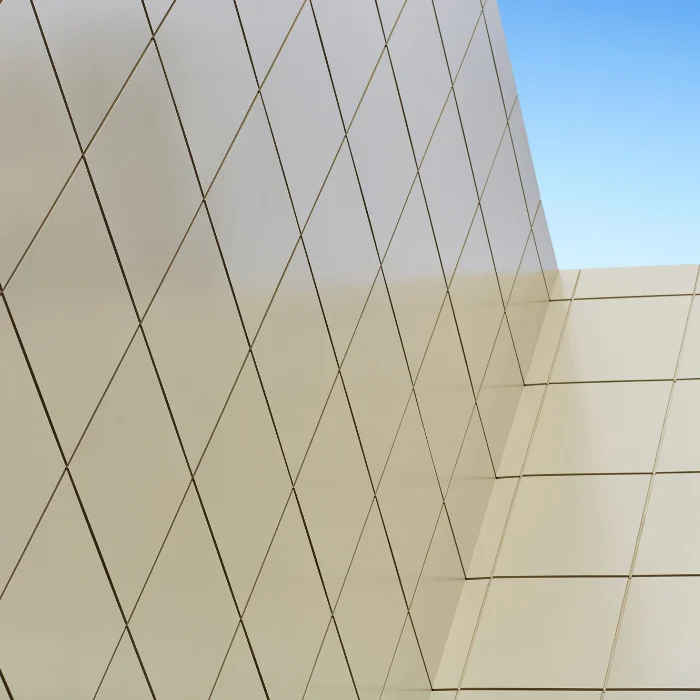
About one year ago, PT MARGACIPTA announced the launch of its new line of aluminum composite panels (ACP) in the U.S. market under the MC-Bond brand name. The price is right and MC Bond continues gain new customers who are in turn finding NEW CUSTOMERS!


MC-Bond is the result of years of technical and marketing research to determine the right product mix worthy of the high level of customer service and top quality products associated with the MARGACIPTA brand. Economical, high impact resistant, easy maintenance, noise absorbing, smooth surface and unlimited color varieties – whether you are looking for new or existing indoor or outdoor applications – MARGACIPTA and our MC-Bond product is your ACP partner.

Contact Us or Your Account Rep for More Details and Pricing

MC-Bond

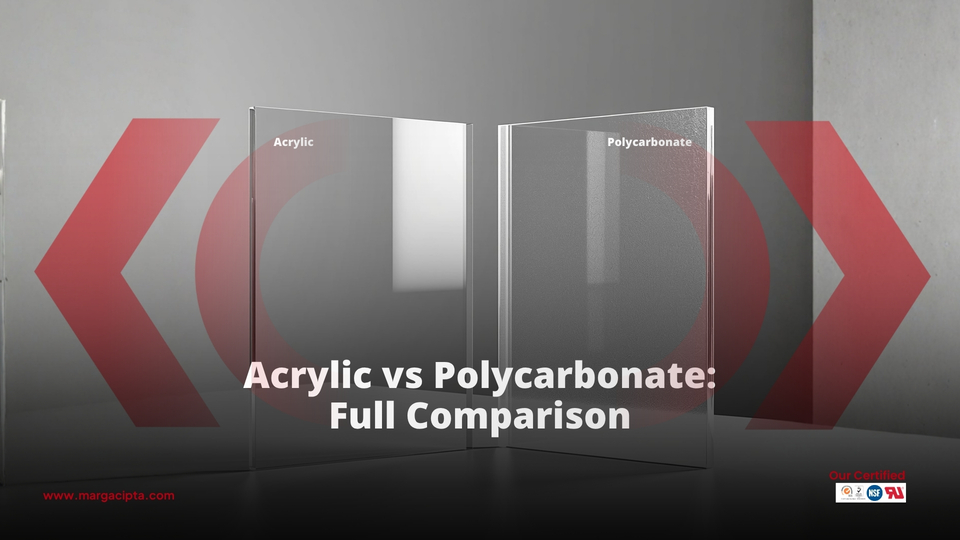
Acrylic vs Polycarbonate: Full Comparison

When choosing the right plastic material for your project, the debate between acrylic vs polycarbonate often comes up. 

Both materials are widely used in industries such as construction, signage, and manufacturing, but they have distinct characteristics that make them suitable for different applications.

Acrylic Versus Polycarbonate

Understanding their differences can help you make a more informed decision based on performance, durability, and cost.

1. Strength and Impact Resistance

One of the key differences between acrylic and polycarbonate lies in their strength, but for most applications, acrylic already offers more than enough durability.

Acrylic is a strong and rigid material, even stronger than glass in many cases, making it highly reliable for everyday use. Its solid structure allows it to maintain shape and stability, which is especially important for applications like displays, signage, partitions, and decorative panels.

While polycarbonate is often highlighted for its extreme impact resistance, this level of durability is typically only necessary for high-stress or industrial applications. For general commercial and design purposes, acrylic provides the ideal balance between strength and functionality.

Read also: How to Identify High-Quality Cast Acrylic Sheets

2. Clarity and Aesthetics

If visual clarity is your top priority, acrylic is the clear winner. Acrylic sheets offer exceptional optical clarity, often compared to glass, with a light transmission rate of up to 92%.

This makes it ideal for applications such as retail displays, aquariums, and architectural elements.

Polycarbonate is slightly less clear and may have a subtle haze. While still transparent, it does not provide the same premium look as acrylic.

3. Scratch Resistance

Acrylic has better natural scratch resistance compared to polycarbonate. This makes it more suitable for applications where surface appearance is important.

Polycarbonate, while stronger, is more prone to scratches and often requires additional coatings to maintain its appearance over time.

4. Weather and UV Resistance

Acrylic performs very well in outdoor environments. It has excellent UV resistance and does not yellow easily, making it a great choice for outdoor signage, skylights, and decorative panels.

Polycarbonate can also be used outdoors but usually requires UV coating to prevent yellowing and degradation over time.

5. Workability and Fabrication

Acrylic is easier to cut, polish, and thermoform. It provides clean edges and a glossy finish, making it a favorite for design-focused applications.

Polycarbonate is more flexible and harder to crack during fabrication, but it can be more challenging to achieve a polished, high-end finish.

Read also: Acrylic for Industrial Use: From Machine Guards to Safety Barriers

6. Cost Consideration

In general, acrylic is more affordable than polycarbonate. If budget is a key factor and extreme impact resistance is not required, acrylic is often the more cost-effective option.

Polycarbonate tends to be more expensive due to its superior strength and durability.

Conclusion

The choice between acrylic vs polycarbonate ultimately depends on your project needs. If you prioritize clarity, aesthetics, and cost-efficiency, acrylic is the better option. However, if impact resistance and durability are critical, polycarbonate is the superior material.

For most commercial and design applications, acrylic offers the best balance between performance and visual appeal.

Ready to explore your clear cast acrylic options? At Margacipta Wirasentosa, we offer high-quality clear cast acrylic sheets from 100% virgin MMA in various thicknesses and custom sizes to fit your needs.

Reach to our Instagram or download our Product Catalog for more information.